


Core Working Principle and Practical Advantages of Pastry Laminator
Core Working Principle and Practical Advantages of Pastry Laminator
Core Working Principle and Practical Advantages of Pastry Laminator
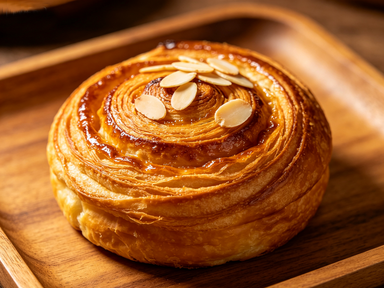
The pastry laminator is core equipment in the baking industry for producing puff pastry products such as Danish bread, croissants, filled puff pastries, flaky mooncakes, donuts, etc. Through precise control of its mechanical system, it achieves standardized pressing and folding of dough, rapidly producing high-quality puff pastry with distinct layers and a crispy texture. Its core principles and practical values are as follows:
I. Basic Structure: Concise and Efficient Core Components
The core structure of the pastry laminator is designed around the central requirements of “stable transmission + precise operation,” with key components performing their respective duties and cooperating efficiently:
1. Frame: The stable foundation of the equipment, ensuring smooth operation of all components and laying the groundwork for processing precision.
2. Dough Rolling Rollers: Core working components with smooth, non-stick surfaces that can precisely roll dough into uniformly thin sheets.
3. Motor and Transmission System: The core power output unit, driving the precise operation of rollers and folding mechanisms through transmission devices such as sprockets and belts.
4. Automatic Dough Winding Mechanism: Can precisely wind the rolled thin sheets according to preset modes.
II. Working Principle: Simple and Clear Operational Logic
The core operation of the pastry laminator follows an automated closed-loop process of “pressing → folding → cycling,” with straightforward and easy-to-understand operational logic:
1. Place the dough to be processed onto the conveyor belt. After starting the equipment, the motor drives all components to operate coordinately through the transmission system.
2. The transmission system steadily conveys the dough to the rolling rollers, which roll the dough into uniformly thin sheets according to preset parameters.
3. By repeating the “pressing → folding” process, the number of layers and thickness of the puff pastry can be precisely controlled, perfectly adapting to the production requirements of foods with different texture preferences.
III. Machine Classification and Core Features
Mainstream pastry laminators on the market are divided into two major types, precisely adapting to different production scenarios, each with outstanding advantages:
1. Fully Automatic Pastry Laminator
Achieves fully automated standardized operation throughout the entire process through an intelligent control system including PLC, servo motors, frequency converters, photoelectric switches, etc., requiring minimal manual intervention.
Advantages:
l Convenient and efficient operation, significantly reducing manual labor intensity.
l Adaptable to various dough types with high product precision and stable, consistent quality.
l Simple cleaning and maintenance, strictly complying with food hygiene standards.
l Ideal choice for large-scale food factories and centralized kitchens of chain bakeries.
2. Semi-Automatic Pastry Laminator
Core functions remain consistent with fully automatic models, with only some auxiliary steps requiring simple manual coordination.
Advantages:
l Low operational threshold and outstanding cost-effectiveness.
l Compact structure with small footprint and economical maintenance costs.
l Perfectly adapts to production needs of small and medium-sized bakeries, hotel kitchens, and similar scenarios.